Why study this course?
The programme approaches the study of film through a varied intellectual approach, exploring cinema in a global context. You will discover filmmaking cultures outside the canon and examine film through new cultural, theoretical and historical perspectives.
This is the only international MLitt in Film and Media Studies in Scotland and one of only two in the UK. The IMACS programme gives students access to 19, including St Andrews, of the top film and media programmes in Europe and Brazil and the top film studies programme in Canada. Students enrolled in the programme spend their first and last semesters at St Andrews, and the remaining two semesters at partner institutions.
The other institutions involved in this programme are:
- Birkbeck College London
- Goethe-Universität Frankfurt am Main
- Ruhr-Universität Bochum
- Johannes-Gutenberg Universität Mainz
- Universidad Pompeu Fabra Barcelona
- Università Cattolica del Sacro Cuore
- Università degli Studi di Udine
- Università degli Studi Roma 3
- Université Charles-de-Gaulle Lille
- Université de Liège
- Université de Montréal
- Concordia University
- Université de Paris Ouest Nanterre La Défense
- Universidade Federal de Juiz de For a
- Université Sorbonne Nouvelle Paris
- Universiteit van Amsterdam
- Universitá Ca' Foscari Venezia
- Stockholms universitet
Teaching
Develop and apply theoretical knowledge and research skills through close analysis, research and critical examination of films and extra-filmic texts. Weekly two-hour seminars, plus film screenings.
Study and research
Individual study and research is encouraged through small group discussion seminars, project work and one-to-one discussions.
Dissertation
A 15,000-word project with guidance throughout the process.
Assessment
A mix of coursework, such as written work, presentations and a dissertation, and exams.
Modules
The IMACS MLitt degree involves completing a number of taught modules within the Department of Film Studies at St Andrews and in two other institutions
Students take two modules every semester during their studies at St Andrews. This includes the required module and an optional module.
Course information may change. Module information and course content, teaching and assessment may change each year and after you have accepted your offer to study at the University of St Andrews. We display the most up-to-date information possible, but this could be from a previous academic year. For the latest module information, see the module catalogue.
-
- Skills, Methods and Approaches in Film Studies: training in the essential skills of close analysis, key methods of historiographical research and salient approaches to film studies scholarship.
-
- Colonial Cinema: explores the transnational, historical developments in cinema, and examines the integral role that cinema played in the control, organisation and governance of the British Empire.
- Film Cultures: focuses on the context in which film exists: production conditions and trends, distribution and circulation practices, and the ever-changing models of exhibiting cinema on all sizes of screens.
- Film Technologies and Aesthetics: examines the ways in which the emergence of new technologies, such as sound, colour, cameras and camera mounts, varying screen dimensions, and lighting systems, affect aesthetic issues in global cinemas.
- Film Theory: introduces the fundamental approaches and future pathways of film theory, across canonical and contemporary texts spanning aesthetics and media, philosophy and psychology, ideology and ecology.
-
In Semester 4, students will work with a supervisor in St Andrews to map out their dissertation project, typically a 15,000-word dissertation.
Student dissertations will be supervised by members of the teaching staff who will advise on the choice of subject and provide guidance throughout the research process. The completed dissertation must be submitted by a date specified in April.
If students choose not to complete the dissertation requirement for the MLitt, there is an exit award available that allows suitably qualified candidates to receive a postgraduate diploma (PGDip). By choosing an exit award, you will receive a PGDip instead of an MLitt.
What it will lead to
Careers
A Film Studies degree opens doors to many careers including academia, creative industries, development, distribution, film festival and cinema programming, arts administration, media management, film and TV research, journalism, publishing, advertising, cultural entrepreneurship, non-governmental organisations, marketing, public relations and education.
We are committed to supporting your career aspirations, whatever stage your career is at. Our Careers Centre can help connect you to our extensive global alumni community for advice and mentoring, as well as offering career coaching, bespoke workshops, employer connections, experiences, and application support.
Our International Education and Lifelong Learning Institute can also support you with academic and professional skills development. The University’s Entrepreneurship Centre offers start-up support for those looking to freelance as well as create their own business.
Further study
Many of our graduates continue their education by enrolling in PhD programmes at St Andrews or elsewhere.
Why St Andrews?
- IMACS offers a unique opportunity to obtain comprehensive international training in film and media studies, spending two semesters at partner institutions across Europe, Brazil and Canada with strengths targeted to students' interests.
- Film Studies receives regular visits from high-profile film scholars, critics and film industry personalities, ranging from Joe Russo to Richard Dyer and Laura Mulvey.
- Students can gain professional experience working with the SANDS International Film Festival, including programming, curation, and publicity.
- Research-led teaching allows students to work closely with the current research projects and interests of staff members, exploring the latest developments and research within the discipline.
Events
Film Studies students are closely involved in the variety of events taking place at St Andrews, including seminar series, workshops and conferences. Specialist training sessions are organised periodically.
Students can become an active part in film-related activities, whether contributing to Frames Cinema Journal, attending and participating in research events and conferences, or participating in the annual Sands: International Film Festival.
Alumni
When you graduate you become a member of the University's worldwide alumni community. Benefit from access to alumni clubs, the Saint Connect networking and mentoring platform, and careers support.
“IMACS is a truly international course, as it offers unique opportunities for travel and collaboration with various countries and institutions. It has provided me with an enriching global academic and personal experience. ”
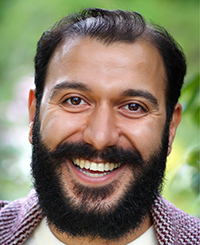
- London, England
Ask a student
If you are interested in learning what it's like to be a student at St Andrews you can speak to one of our student ambassadors. They'll let you know about their top tips, best study spots, favourite traditions and more.
Entry requirements
- A 2.1 Honours undergraduate degree in a relevant discipline. If you studied your first degree outside the UK, see the international entry requirements.
- Proficiency in at least one relevant language beyond English (Class C1 on European Framework).
The qualifications listed are indicative minimum requirements for entry. Some academic Schools will ask applicants to achieve significantly higher marks than the minimum. Obtaining the listed entry requirements will not guarantee you a place, as the University considers all aspects of every application including, where applicable, the writing sample, personal statement, and supporting documents.
Application requirements
- CV or résumé - this should include your personal details with a history of your education and employment to date
- covering letter
- sample of your own, single-authored academic written work in English (1,000 - 3,000 words)
- one original signed academic reference
- academic transcripts and degree certificates
For more guidance, see supporting documents and references for postgraduate taught programmes.
English language proficiency
If English is not your first language, you may need to provide an English language test score to evidence your English language ability. See approved English language tests and scores for this course.
Fees and funding
- UK: £23,150
- Rest of the world: £48,450
Before we can begin processing your application, a payment of an application fee of £50 is required. In some instances, you may be eligible for an application fee waiver. Details of this, along with information on our tuition fees, can be found on the postgraduate fees and funding page.
Scholarships and funding
We are committed to supporting you through your studies, regardless of your financial circumstances. You may be eligible for scholarships, discounts or other support:
Contact us
- Postgraduate online information events
- The School can help with course content, teaching and other topics: ask the School
- Ask University Admissions about how to apply, fees, scholarships and other topics
Start your journey
Legal notices
Admission to the University of St Andrews is governed by our Admissions policy
Information about all programmes from previous years of entry can be found in the course archive.
Curriculum development
As a research intensive institution, the University ensures that its teaching references the research interests of its staff, which may change from time to time. As a result, programmes are regularly reviewed with the aim of enhancing students' learning experience. Our approach to course revision is described online.
Tuition fees
The University will clarify compulsory fees and charges it requires any student to pay at the time of offer. The offer will also clarify conditions for any variation of fees. The University’s approach to fee setting is described online.
Page last updated: 12 August 2025